
The Role of High-Performance Rubber Components in Pakistan’s Manufacturing Sector
July 7, 2026
Preventing Industrial Fluid Leaks: How to Choose and Maintain Rubber O-Rings
July 14, 2026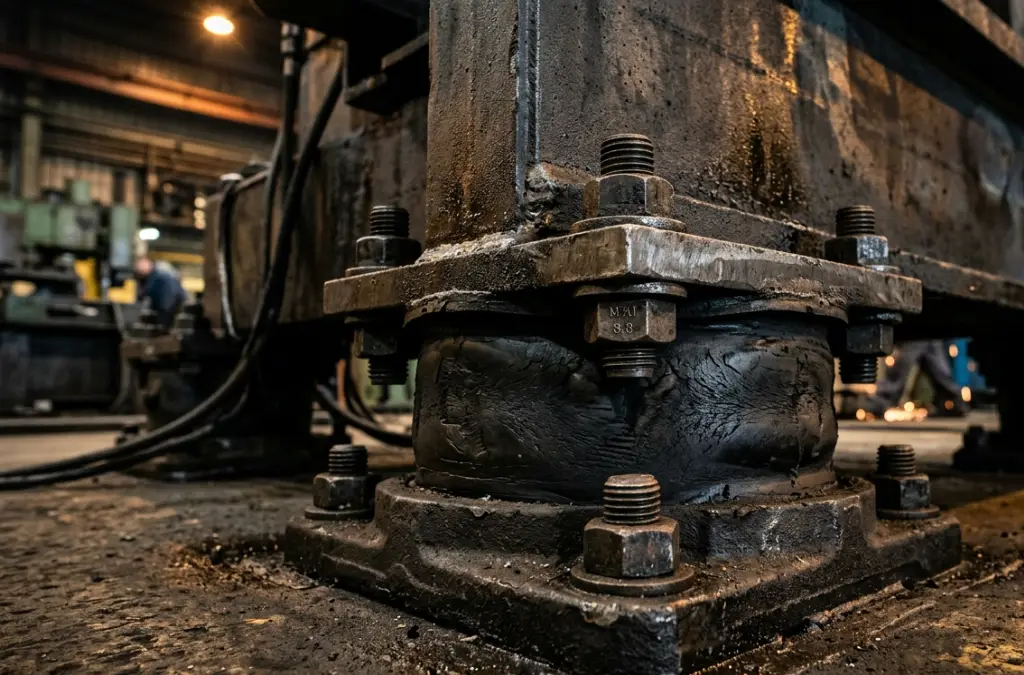
Operating heavy industrial machinery often introduces significant vibration and noise. These aren’t just minor inconveniences; they can lead to premature equipment wear, structural damage, reduced operational efficiency, and even safety hazards. Investing in the right anti-vibration mounts is a critical decision that can profoundly impact your plant’s productivity and profitability. As a leading Anti Vibration Mount Manufacturer, Ali Enterprises Pakistan understands the nuances of selecting solutions that truly perform.
Why Vibration Control is Non-Negotiable in Industrial Settings
Vibration is a pervasive force in industrial environments. It emanates from various sources, including engines, motors, presses, pumps, and conveyors. Without proper management, its detrimental effects can compound quickly.
Protecting Equipment Lifespan
Constant vibration subjects machinery components to repetitive stress. This accelerates fatigue, loosening of fasteners, and wear on bearings, gears, and shafts. Over time, this leads to costly breakdowns and significantly shortens the lifespan of valuable assets. Effective vibration isolation protects your investment and reduces the frequency of replacements and repairs.
Enhancing Operational Performance and Precision
For many industrial processes, especially those requiring high precision, vibration can introduce inaccuracies. This impacts product quality, increases scrap rates, and reduces overall process efficiency. By isolating vibrations, machinery can operate more stably and consistently, leading to superior output.
Ensuring Workplace Safety and Comfort
High levels of vibration can contribute to operator fatigue, discomfort, and even long-term health issues. Moreover, uncontrolled vibration can compromise structural integrity within a facility, posing serious safety risks. Anti-vibration mounts create a safer and more comfortable working environment.
Reducing Noise Pollution
Vibration is a primary source of industrial noise. Excessive noise levels are not only a nuisance but can also violate occupational health and safety regulations. Mounts designed for vibration isolation simultaneously reduce noise transmission, contributing to a quieter, more compliant workplace.
Understanding Different Types of Anti-Vibration Mounts
Before delving into selection criteria, it’s essential to recognize the common types of anti-vibration mounts available. Each type offers distinct advantages based on material properties and design.
Rubber Mounts: Versatility and Effectiveness
Rubber anti-vibration mounts are arguably the most common and versatile. They utilize the elastic properties of rubber compounds to absorb and dissipate vibrational energy. Their effectiveness stems from the careful engineering of rubber hardness (durometer), shape, and size.
- Natural Rubber (NR): Offers excellent elasticity, high tensile strength, and good low-temperature flexibility. Ideal for general-purpose vibration isolation.
- Neoprene (CR): Known for good resistance to oils, chemicals, weathering, and ozone. Suitable for outdoor applications or where moderate chemical exposure is present.
- Nitrile (NBR): Provides superior resistance to oils, fuels, and solvents. Often used in hydraulic and pneumatic equipment.
- EPDM (Ethylene Propylene Diene Monomer): Exhibits outstanding resistance to weathering, ozone, and water. Commonly found in outdoor and automotive applications.
- Silicone (VMQ): Excellent high-temperature resistance and flexibility across a wide temperature range. Used in extreme temperature environments.
Polyurethane (PU) Mounts: Durability and Load Bearing
Polyurethane mounts offer a combination of rubber’s elasticity and plastic’s durability. They are highly abrasion-resistant, have excellent load-bearing capacity, and can be formulated for specific stiffness. These are particularly valuable in heavy-duty applications where both resilience and strength are needed.
Spring Mounts: High Deflection and Low Frequency Isolation
Spring mounts, often used for very heavy machinery or applications requiring isolation of low-frequency vibrations, provide significant deflection. They are typically combined with damping elements to control resonance.
Air Mounts: Precision and Adjustable Isolation
Air mounts (or air springs) offer highly effective isolation and can be adjusted to maintain constant height under varying loads. They are often found in sensitive equipment and precision instruments.
Wire Rope Isolators: Extreme Environments
These mounts are made from twisted strands of wire rope. They excel in harsh environments, offering excellent shock and vibration isolation across a wide temperature range and are resistant to corrosion.
Key Factors for Selecting the Right Anti-Vibration Mounts
Choosing the optimal mount requires a systematic approach, considering several critical parameters of both the machinery and its operating environment. As an experienced Anti Vibration Mount Manufacturer, Ali Enterprises emphasizes a detailed assessment to ensure a perfect fit.
1. Identify the Machinery and Its Function
Start by understanding the equipment itself. What type of machine is it? (e.g., generator, pump, compressor, press, conveyor). What is its primary function? Knowing this helps determine the critical vibration points and potential impact on operations.
2. Determine the Total Load and Weight Distribution
The most crucial factor is the total weight of the machinery. This load must be evenly distributed among the mounts. Divide the total weight by the number of mounting points to find the static load per mount. Always select mounts with a load capacity comfortably exceeding this calculated value to account for dynamic forces and safety margins.
3. Analyze the Source and Frequency of Vibration
Understanding the vibration characteristics is paramount. What is the operating speed (RPM) of the motor or rotating components? This directly relates to the forcing frequency (Hz) of the vibration. The natural frequency of the selected mount system must be significantly lower than the forcing frequency for effective isolation. Aim for a natural frequency that is one-third or less of the lowest excitation frequency.
4. Evaluate the Operating Environment
Industrial environments are diverse and often challenging. Consider the following:
- Temperature Extremes: Will the mounts be exposed to very hot or cold conditions? This dictates the choice of rubber compound (e.g., silicone for high temperatures, natural rubber for cold).
- Chemical Exposure: Are oils, fuels, solvents, acids, or alkalis present? Select materials like Nitrile or Neoprene for oil resistance, or EPDM for excellent chemical resistance.
- Outdoor/Weathering: For outdoor applications, mounts need to resist UV radiation, ozone, and moisture. EPDM and Neoprene are strong contenders.
- Dust and Abrasives: In dusty or abrasive environments (like cement plants or mining operations), highly durable materials like polyurethane are often preferred.
- Cleanliness Requirements: For food and pharmaceutical industries, specific FDA-approved materials or easy-to-clean designs may be necessary.
5. Consider Required Isolation Efficiency and Deflection
How much vibration reduction is needed? Higher isolation efficiency generally requires greater deflection from the mounts. Static deflection is the amount a mount compresses under the machine’s weight. The greater the deflection, the lower the natural frequency of the system, leading to better isolation from higher forcing frequencies.
6. Mounting Orientation and Configuration
How will the mounts be installed? Are they supporting a vertical load, or will there be significant horizontal forces? Some mounts are designed for compressive loads, while others can handle shear or a combination. The mounting configuration (e.g., four corner mounts, multiple evenly spaced mounts) affects stability and load distribution.
7. Space Constraints
Physical space limitations under or around the machinery can influence the type and size of mounts you can use. Always measure available space accurately.
Custom Solutions for Unique Industrial Challenges
Many industrial applications have specific requirements that off-the-shelf solutions cannot meet. This is where the expertise of a custom Anti Vibration Mount Manufacturer like Ali Enterprises becomes invaluable.
We specialize in designing and producing custom molded rubber products, including anti-vibration mounts, tailored to your exact specifications. Whether it’s a unique load requirement, a challenging chemical environment, or a specific dimensional constraint, our engineering team works with you to develop bespoke solutions.
Our capabilities include:
- Material Selection: Guiding you through the best rubber or polyurethane compound for your specific operating conditions.
- Design Optimization: Engineering mount geometries for optimal load distribution and isolation efficiency.
- Prototyping and Testing: Ensuring the custom solution meets performance expectations before full-scale production.
- OEM Quality: Delivering components that meet the stringent quality standards required by original equipment manufacturers.
Real-World Applications Across Industries
Ali Enterprises supplies anti-vibration mounts to a wide range of demanding industries, including:
- Cement Industry: Isolating heavy crushers, conveyors, and mills from intense vibrations.
- Oil & Gas: Ensuring stability for pumps, compressors, and generators in harsh environments.
- Mining Operations: Protecting heavy-duty equipment from shock and continuous vibration.
- Power Generation: Supporting critical turbines, generators, and auxiliary equipment.
- Construction Equipment: Enhancing operator comfort and equipment longevity in excavators and loaders.
- Food & Pharmaceutical: Providing hygienic and effective isolation for processing machinery.
In each sector, our anti-vibration solutions contribute significantly to reducing downtime, lowering maintenance costs, and improving overall operational efficiency. (See our industrial sealing solutions for related products at Ali Enterprises Pakistan).
Installation and Maintenance Tips
Even the best anti-vibration mounts require proper installation and occasional checks to ensure their long-term effectiveness.
- Follow Manufacturer Guidelines: Always adhere to the installation instructions provided by the Anti Vibration Mount Manufacturer.
- Ensure Even Loading: Distribute the machine’s weight as evenly as possible across all mounting points.
- Check Alignment: Proper alignment prevents uneven stress on the mounts and machinery.
- Regular Inspection: Periodically inspect mounts for signs of wear, cracking, or deterioration. Environmental factors can degrade rubber over time.
- Replace as Needed: Worn or damaged mounts lose their effectiveness and should be replaced promptly to prevent equipment damage.
Partner with an Expert Anti Vibration Mount Manufacturer
Selecting the right anti-vibration mounts is a critical engineering decision that directly impacts the reliability, performance, and safety of your industrial operations. It requires a deep understanding of mechanics, materials science, and environmental factors.
By partnering with a seasoned Anti Vibration Mount Manufacturer like Ali Enterprises Pakistan, you gain access to decades of expertise in designing and producing high-performance rubber and polyurethane components. We are committed to providing tailored solutions that not only meet but exceed the demanding requirements of industrial procurement managers, maintenance engineers, and OEM manufacturers across diverse sectors.
Contact us today to discuss your specific vibration control challenges and discover how our precision-engineered solutions can enhance your machinery’s lifespan and operational efficiency. Learn more about our custom rubber molding capabilities.
Frequently Asked Questions (FAQs)
Q1: How often should anti-vibration mounts be replaced?
A1: The replacement frequency depends heavily on the operating environment, load, and the specific material of the mount. Regular inspections for signs of wear, cracking, or hardening are crucial. In demanding environments, more frequent checks are advisable. Generally, mounts in heavy-duty or critical applications should be inspected annually and replaced at the first sign of degradation or when isolation effectiveness diminishes.
Q2: Can one type of anti-vibration mount be used for all types of machinery?
A2: No, it is not advisable. Different machines produce different vibration frequencies and carry varying loads. The operating environment (temperature, chemicals) also plays a significant role. Selecting a mount requires careful consideration of these factors to ensure optimal isolation and longevity. A general-purpose mount might offer some relief, but a precisely chosen or custom-engineered mount will provide superior performance and protection.
Q3: What is the most important factor when selecting an anti-vibration mount?
A3: While several factors are crucial, determining the total load of the machinery and the vibration frequency is arguably the most important. These two factors directly dictate the required load capacity and the natural frequency needed from the mount for effective isolation. Without accurately assessing these, other selection criteria become less relevant in achieving optimal vibration control.