
How to Select the Right Anti-Vibration Mounts for Heavy Industrial Machinery
July 10, 2026
The Ultimate Guide: 7 Crucial Factors for Choosing Your Industrial Rubber Supplier
August 4, 2026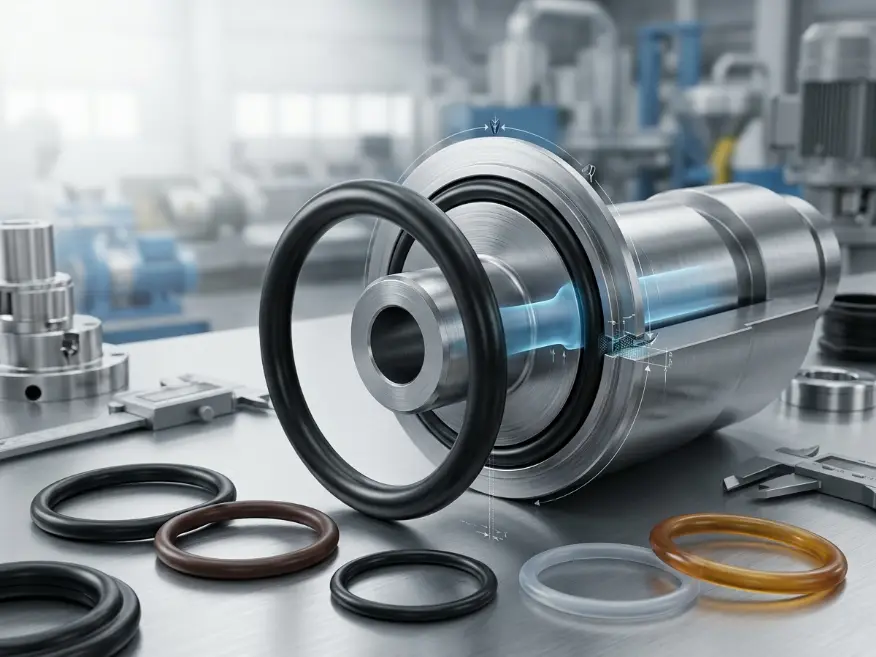
Industrial fluid leaks are more than just a minor inconvenience. For plant managers and maintenance engineers, they represent a costly threat to operational efficiency, workplace safety, and machinery lifespan. A single dripping seal can escalate into unplanned downtime, environmental hazards, and expensive equipment replacement. At the heart of most leak-prevention strategies lies a small but incredibly vital component: the humble rubber O-ring.
While O-rings are relatively simple in shape, their engineering and material chemistry are highly sophisticated. Selecting the wrong compound or neglecting maintenance can lead to premature failure. This comprehensive guide explores how to choose, install, and maintain these essential sealing components. We also highlight why partnering with a premier O Ring Manufacturer Pakistan ensures your machinery remains leak-free under the most demanding conditions.
Understanding How O-Rings Achieve an Airtight Seal
Before diving into selection criteria, it is essential to understand how O-rings prevent leaks. An O-ring is a loop of elastomer with a round cross-section. When placed inside a designed groove and compressed between two or more parts, it creates a physical barrier that blocks the passage of fluids or gases.
Under system pressure, the O-ring is pushed against the low-pressure side of the groove. This pressure deforms the elastomer, forcing it to fill any microscopic gaps in the mating surfaces. The ability of the rubber material to return to its original shape—known as sealing memory—is what sustains this barrier over time. Consequently, this process relies heavily on selecting the correct elastomer compound for your specific industrial environment.
Material Selection: The Foundation of Leak Prevention
Not all rubber compounds are created equal. Sourcing from a reliable O Ring Manufacturer Pakistan gives you access to specialized materials engineered for specific industrial challenges. Choosing the right material requires evaluating operating temperature, chemical exposure, and system pressure.
Here are the most common O-ring materials used in industrial manufacturing:
Nitrile Rubber (NBR / Buna-N)
Nitrile is the workhorse of the sealing industry. It offers excellent resistance to petroleum-based oils, fuels, and hydraulic fluids. NBR exhibits good mechanical strength and wear resistance. Therefore, maintenance engineers frequently choose it for general-purpose sealing in automotive and machinery manufacturing. However, it has limited resistance to ozone and weathering.
Viton / Fluorocarbon (FKM)
When your systems operate under extreme heat or harsh chemical exposure, Viton is the premier choice. This high-performance elastomer withstands temperatures up to 200°C and resists acids, fuels, and organic solvents. Sourcing FKM O-rings from an experienced manufacturer is ideal for chemical processing, oil and gas, and heavy industrial machinery.
Ethylene Propylene Diene Monomer (EPDM)
EPDM is highly valued for its superior resistance to water, steam, ozone, and outdoor weathering. It remains flexible at low temperatures and is ideal for HVAC systems, outdoor construction equipment, and steam applications. EPDM is also widely used in the food and beverage industry due to its clean profile. Note that it must never be used with petroleum-based oils.
Silicone (VMQ)
Silicone O-rings are famous for their wide temperature stability, ranging from very low temperatures up to 230°C. They are highly flexible and inert, making them the preferred material for medical devices, food processing, and pharmaceutical applications. However, silicone lacks high tensile strength and tear resistance, so it is typically reserved for static seals rather than dynamic moving parts.
Polyurethane (PU)
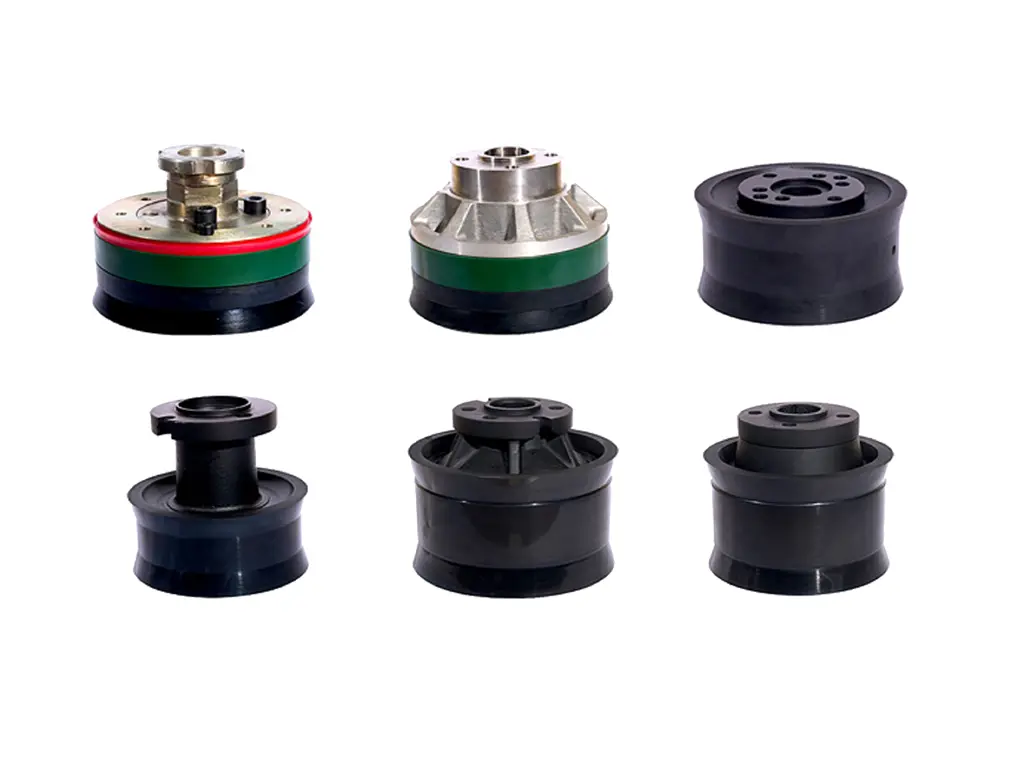
Polyurethane is incredibly tough, offering outstanding wear and abrasion resistance. PU seals and O-rings are highly suitable for high-pressure hydraulic cylinders where mechanical stress is common. When you partner with a custom O Ring Manufacturer Pakistan, you can source specialized polyurethane seals tailored for heavy machinery and concrete pump equipment.
Key Engineering Considerations for O-Ring Design
Selecting the right material is only half the battle. Precision engineering dictates how well the seal performs in practice. When sourcing replacement parts or designing new systems, consider the following parameters:
Inside Diameter (ID) and Cross-Section (CS)
The dimensions of the O-ring must perfectly match the groove dimensions. If the inside diameter is too small, the ring will stretch excessively, thinning the cross-section and reducing sealing capability. Conversely, an oversized O-ring will bunch up during assembly, leading to immediate leaks.
Groove Depth and Width
The metal channel holding the O-ring—the gland—must be precisely machined. If the groove is too shallow, the O-ring will be over-compressed, leading to permanent deformation (compression set). If the groove is too deep, there will not be enough squeeze to create a reliable barrier.
Static vs. Dynamic Sealing
Determine whether your application is static (no moving parts, such as pipe joints) or dynamic (reciprocating, rotating, or oscillating shafts). Dynamic seals require materials with low friction, superior wear resistance, and excellent lubrication retention to prevent heat buildup and friction-induced wear.
Common Causes of O-Ring Failure and How to Prevent Them
Understanding why O-rings fail helps maintenance managers take proactive measures. Most failures are preventable when you know what signs to look for:
1. Compression Set
This occurs when an O-ring loses its elasticity and fails to return to its original shape after being compressed. Over time, the seal becomes flat on both sides, leading to slow, persistent leaks. This is often caused by excessive heat, over-compression, or chemical attack. To resolve this, upgrade to a higher-temperature elastomer like Viton or optimize the groove depth.
2. Extrusion and Nibbling
Under high system pressure, the O-ring material can be forced into the tiny clearance gaps between mating metal parts. This causes the edges of the ring to chip or tear, a phenomenon known as nibbling. The best solution is to use back-up rings made of harder materials like PTFE, or specify an O-ring with a higher durometer (hardness) from your manufacturer.
3. Abrasion and Wear
In dynamic applications, continuous friction can scrape away the surface of the elastomer, leading to premature failure. This is especially true when sealing rough surfaces or operating without proper lubrication. Ensure smooth surface finishes on metal shafts and utilize appropriate grease or system lubricants.
4. Chemical Degradation
When an incompatible elastomer meets harsh chemicals, it can swell, soften, crack, or dissolve completely. This destroys the seal structural integrity instantly. Always consult material compatibility charts and discuss chemical exposures in detail with your engineering partner.
Maintenance and Installation Best Practices
Implementing a proactive maintenance routine can multiply the lifespan of your industrial seals. Follow these industry-proven steps during installation and upkeep:
- Handle with Care: Never use sharp tools like screwdrivers to install or remove O-rings. Use specialized brass pick tools to avoid scratching the delicate elastomer or the metal groove.
- Use Proper Lubrication: Applying a thin, compatible lubricant reduces friction during installation, prevents tearing, and helps seat the ring correctly. Ensure the lubricant does not chemically degrade the elastomer.
- Inspect Before Installation: Always check new O-rings for dust, surface cracks, or molding defects. Even minor imperfections can cause catastrophic leaks under pressure.
- Avoid Over-Stretching: Never stretch an O-ring more than 5% of its inner diameter during installation, as this reduces its life expectancy and sealing pressure.
- Implement Scheduled Replacements: Do not wait for a seal to blow before replacing it. Establish a preventive maintenance schedule based on run hours and environmental conditions to replace seals before they degrade.
The Importance of Quality Standards in O-Ring Manufacturing
When selecting an O Ring Manufacturer Pakistan, ensuring adherence to global quality standards is vital. At Ali Enterprises Pakistan, we prioritize international standards to deliver world-class products.
Dimensional Tolerances (ISO 3601)
Sealing efficiency relies on microscopic precision. ISO 3601-1 specifies the dimensional tolerances for O-rings, ensuring they fit standard groove sizes perfectly. Adhering to these tight tolerances prevents bypass leaks in high-tolerance machinery.
Material Testing (ASTM D2000)
ASTM D2000 is the global classification system for rubber materials in automotive and industrial applications. This system ensures that our nitrile, FKM, and EPDM compounds possess the precise tensile strength, elongation, and heat resistance required for your heavy engineering projects. Sourcing certified components guarantees consistent, predictable performance.
Partnering with Ali Enterprises Pakistan: Your Trusted O-Ring Supplier
For industrial operations across Pakistan, sourcing high-quality, reliable spare parts is critical to maintaining productivity. Ali Enterprises Pakistan stands out as a leading O Ring Manufacturer Pakistan, offering custom molding solutions engineered for performance.
We utilize state-of-the-art compression molding and precision engineering to manufacture O-rings that meet strict OEM standards. Whether you operate a cement plant, a textile mill, or a chemical processing facility, our team helps you select the exact compound for your application. From standard nitrile and high-temperature Viton to durable polyurethane seals, we provide custom sizes and volume production with fast turnaround times. Choosing our locally manufactured, high-grade sealing components reduces your dependency on costly imports and minimizes lead times.
Frequently Asked Questions (FAQs)
How do I determine the right durometer (hardness) for my O-ring?
Durometer represents the hardness of the rubber material, typically measured on the Shore A scale. Standard O-rings usually have a durometer of 70 Shore A. For higher-pressure applications (above 1,500 PSI), harder materials (80 or 90 Shore A) are recommended to prevent extrusion. For lower-pressure or delicate sealing surfaces, softer compounds (50 to 60 Shore A) provide a better seal with less clamping force.
Can I reuse an industrial O-ring after maintenance?
Generally, it is highly recommended to replace O-rings whenever you disassemble a component for maintenance. Even if the seal appears intact, it has already experienced compression, heat, and physical stress. Re-installing a used O-ring significantly increases the risk of immediate or premature leaks, costing you more in downtime than a replacement seal.
How does temperature affect O-ring shelf life?
O-rings are susceptible to environmental aging. To maximize shelf life, store them in a cool, dry, and dark environment, away from direct sunlight, ozone-producing motors, and electrical equipment. When stored correctly, nitrile O-rings can last up to 15 years, while Viton and silicone seals have a practically unlimited shelf life.
Conclusion and Next Steps
Preventing industrial fluid leaks is vital for maximizing machine uptime and maintaining safe, clean operations. By choosing the correct elastomer material, paying close attention to groove designs, and implementing proper maintenance protocols, you can drastically reduce seal failures.
Are you looking to eliminate recurrent leaks and upgrade your sealing systems? Partner with Ali Enterprises Pakistan, the premier O Ring Manufacturer Pakistan. Contact our engineering team today to request a custom quote, secure sample-based manufacturing, or receive professional material selection advice tailored to your industrial needs.