
Food-Grade Hydraulic Hose in Lahore | Ali Enterprises
November 5, 2026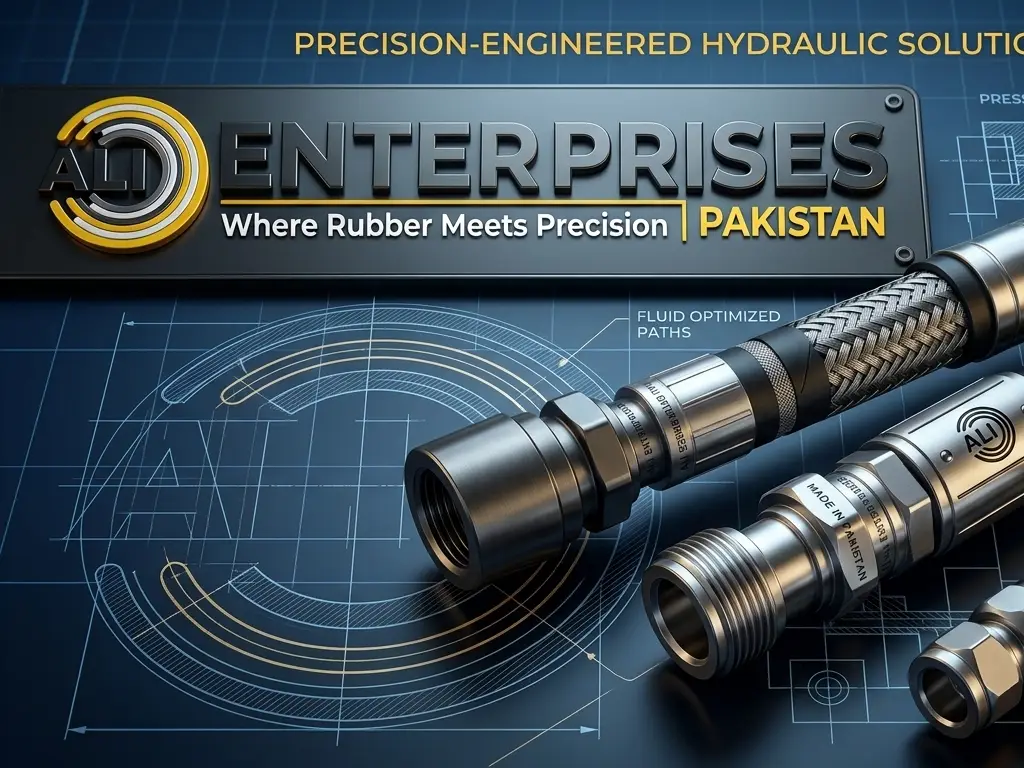
Hydraulic Hose Pipe in Lahore: Types, Sizes, Pressure Ratings and Buying Guide
From excavators and concrete pumps to presses and forging lines, almost every heavy machine in Pakistan depends on a hydraulic hose pipe to move power from the pump to the cylinder or motor. Choosing the wrong hose can cause leaks, downtime and, in the worst case, injury. This buying guide from Ali Enterprises explains how hydraulic hose pipes are built, the main types, how to read sizes and pressure ratings, and how to choose the right one in Lahore.
What Is a Hydraulic Hose Pipe?
A hydraulic hose pipe is a flexible, reinforced line that carries pressurised hydraulic fluid, usually oil, between components. Unlike rigid steel tube, it can absorb movement and vibration, which makes it ideal for machines with moving arms, booms and cylinders. Hoses are fitted with metal couplings at each end, normally attached by crimping, to form a complete assembly.
How a Hydraulic Hose Is Built
- Inner tube: a synthetic rubber layer that carries the fluid and must be compatible with it.
- Reinforcement: one or more layers of steel wire braid or spiral wire that give the hose its pressure strength.
- Outer cover: a tough rubber layer that protects the reinforcement from abrasion, weather, oil and ozone.
Main Types of Hydraulic Hose
- Single wire braid (SAE 100R1AT / EN 853 1SN): a medium-pressure hose widely used on general machinery and mobile equipment.
- Double wire braid (SAE 100R2AT / EN 853 2SN): the same style with two braids for higher working pressure. This is the everyday workhorse in many Pakistani workshops and factories.
- Four-spiral and six-spiral wire (4SP, 4SH, R12, R13, R15): designed for very high pressures and heavy impulse duty, such as excavators and hydraulic presses.
- Low-pressure return and suction hoses: used for return, drain and inlet lines where pressure is much lower.
Exact pressure ratings depend on the hose size and the manufacturer, so always check the datasheet for the specific hose rather than relying on a general type name.
Understanding Hydraulic Hose Sizes
Hydraulic hose size is based on inner diameter and is often given as a dash number. The dash number is the inner diameter in sixteenths of an inch. For example, -4 is 1/4 inch, -6 is 3/8 inch, -8 is 1/2 inch, -12 is 3/4 inch and -16 is 1 inch. Using a hose that is too small restricts flow, creates heat and wastes energy, while a hose that is too large adds cost and weight without any benefit.
Pressure Ratings and the Safety Factor
Every hose has a maximum working pressure, and a much higher burst pressure. The standard safety factor is four to one, meaning burst pressure is at least four times the working pressure. Never choose a hose based on average pressure alone. Pressure spikes, caused by sudden valve closing or heavy loads, must also be within the hose’s rating. Temperature matters too: most standard hoses are suited to roughly minus 40 to plus 100 degrees Celsius, and the rating falls as temperatures rise.
Where Hydraulic Hose Pipes Are Used
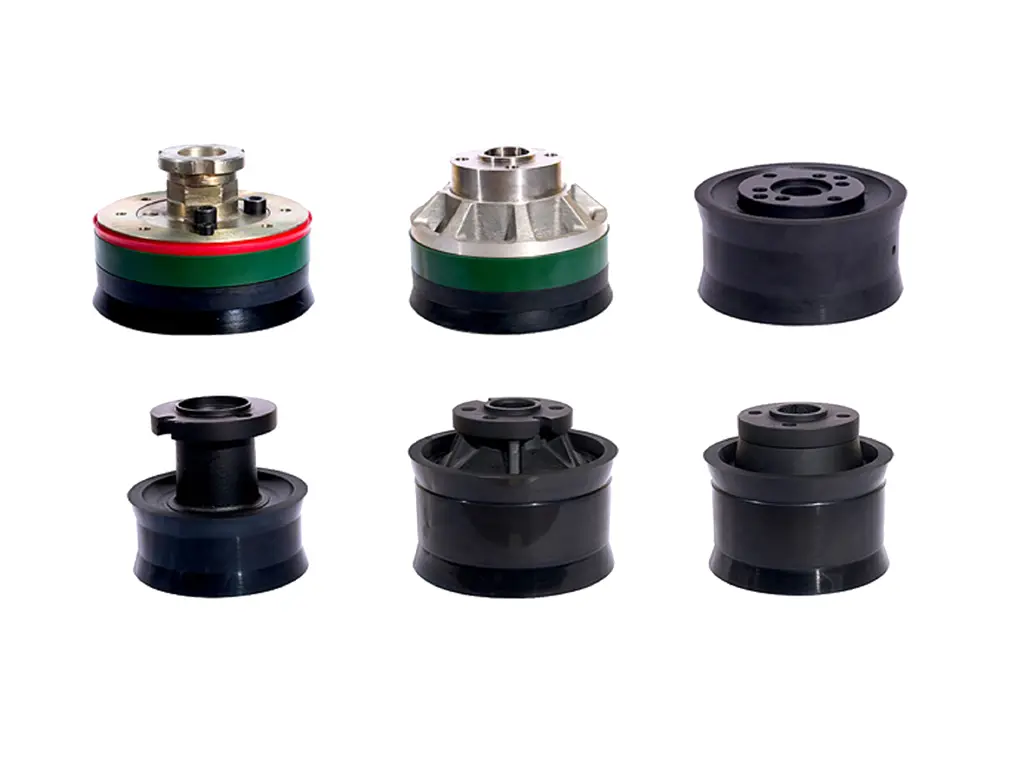
- Concrete pumps and construction machinery, alongside parts like our concrete pump piston rams
- Excavators, loaders and cranes
- Presses, forging and metal-working lines
- Textile, paper and glass manufacturing plants
- Agricultural tractors and implements
- Power plants and industrial lifting equipment
How to Choose a Hydraulic Hose Pipe: The STAMPED Checklist
Hose professionals often use the STAMPED checklist to avoid mistakes.
- Size: the inner diameter, matched to flow requirements.
- Temperature: both the fluid temperature and the outside ambient temperature.
- Application: how and where the hose moves, bends and rubs.
- Media: the type of hydraulic fluid and any exposure to chemicals.
- Pressure: working pressure, pressure spikes and the safety margin.
- Ends: the coupling type, thread and orientation.
- Delivery: the length needed and how quickly you need the assembly.
Common Causes of Hose Failure
- Pressure above the rated working pressure
- Bending tighter than the minimum bend radius
- Twisting during installation
- Rubbing against edges or other hoses
- Heat exposure beyond the rated temperature
- Incorrectly crimped or mismatched fittings
- Age and ozone attack on the outer cover
Most failures are preventable with correct selection, careful routing and regular inspection.
Safety First
Hydraulic systems store a lot of energy. Always release pressure before disconnecting a hose. Never check for leaks with your hand, because a fine, high-pressure jet can penetrate skin. Replace any hose with bulges, exposed wire or cracked covers immediately. Use hose guards where a failure could endanger people.
Why Choose Ali Enterprises in Lahore
Ali Enterprises is an established industrial rubber products supplier on Brandreth Road, Lahore. You can view our full hydraulic hoses for high working pressure, and explore related lines such as rubber suction hoses, PVC suction hoses and PTFE line hoses. We also supply hose clamps, O rings and oil seals to complete your hydraulic system. For branded hose and belting, see our import products. Please confirm availability and sizes before ordering.
Frequently Asked Questions
What is the difference between 1SN and 2SN hydraulic hose?
1SN has one layer of steel wire braid, while 2SN has two. The extra layer lets 2SN handle higher working pressure at the same size.
How do I know the right size of hydraulic hose pipe?
Match the inner diameter of the old hose or the port size on the machine, then confirm it suits your flow rate. The dash number printed on the hose shows its inner diameter.
Can I make my own hydraulic hose assembly?
Crimping requires the right machine, dies and fitting combination for the specific hose. Incorrect crimping is a major cause of failure, so use a qualified supplier.
Where can I buy hydraulic hose pipe in Lahore?
Ali Enterprises supplies hydraulic hoses from Brandreth Road, Lahore. Contact us through the contact page or call +92-321-4435375.
Request a Quote Today
Tell us your working pressure, size, fluid and length, and we will recommend the right hydraulic hose pipe. See our complete product range or call +92-321-4435375 now.