
Preventing Industrial Fluid Leaks: How to Choose and Maintain Rubber O-Rings
July 14, 2026
Mastering Industrial Reliability: Your Guide to High-Performance Rubber Parts Solutions
August 15, 2026
In the demanding world of industrial operations, every component plays a vital role in ensuring efficiency, safety, and longevity. When it comes to industrial rubber products, the choice of supplier is not just a transaction; it is a strategic decision that directly impacts your equipment’s performance, maintenance costs, and ultimately, your bottom line. For procurement managers, maintenance engineers, and plant managers alike, identifying an industrial rubber supplier that meets stringent quality, reliability, and technical requirements is paramount. But with numerous options available, how do you make the best choice?
This guide will walk you through seven crucial factors that every discerning procurement professional must consider. By focusing on these elements, you can secure a partnership that delivers consistent, high-performance rubber and polyurethane components, safeguarding your operations against unexpected downtime and ensuring optimal value.
1. Unwavering Quality and Material Expertise
The foundation of any superior industrial rubber product lies in its material composition and manufacturing quality. A top-tier industrial rubber supplier must demonstrate profound expertise in polymer science, understanding the nuances of different rubber compounds and their suitability for specific applications. This knowledge ensures that components can withstand extreme temperatures, chemicals, abrasion, and dynamic stresses prevalent in industrial environments.
The Foundation of Performance: Material Selection
Different applications demand different materials. For instance, a chemical processing plant might require EPDM or Viton for chemical resistance, while an automotive component might need NBR for oil and fuel resistance. The ability of an industrial rubber supplier to guide you through material selection – from natural rubber and neoprene to silicone, polyurethane, and specialty elastomers – is invaluable. They should understand the tensile strength, elongation, hardness, and environmental resistance properties of each material, recommending the optimal choice for your specific needs.
Certifications and Standards: Your Assurance
Quality is not just a claim; it is a demonstrable commitment. Look for an industrial rubber supplier with internationally recognized quality certifications such as ISO 9001. These certifications are not merely badges; they represent a robust quality management system that ensures consistent product quality from design to delivery. Adherence to industry-specific standards, like ASTM or SAE, further underscores a supplier’s dedication to producing reliable, high-performance components. For instance, Ali Enterprises Pakistan proudly upholds these rigorous standards, ensuring every product meets or exceeds OEM quality requirements.
2. Precision Customization and Engineering Capabilities
Off-the-shelf solutions often fall short when dealing with specialized industrial machinery or unique operational challenges. The capacity of an industrial rubber supplier to offer custom engineering and manufacturing is a game-changer for many industries.
Beyond Standard: Custom Molded Solutions
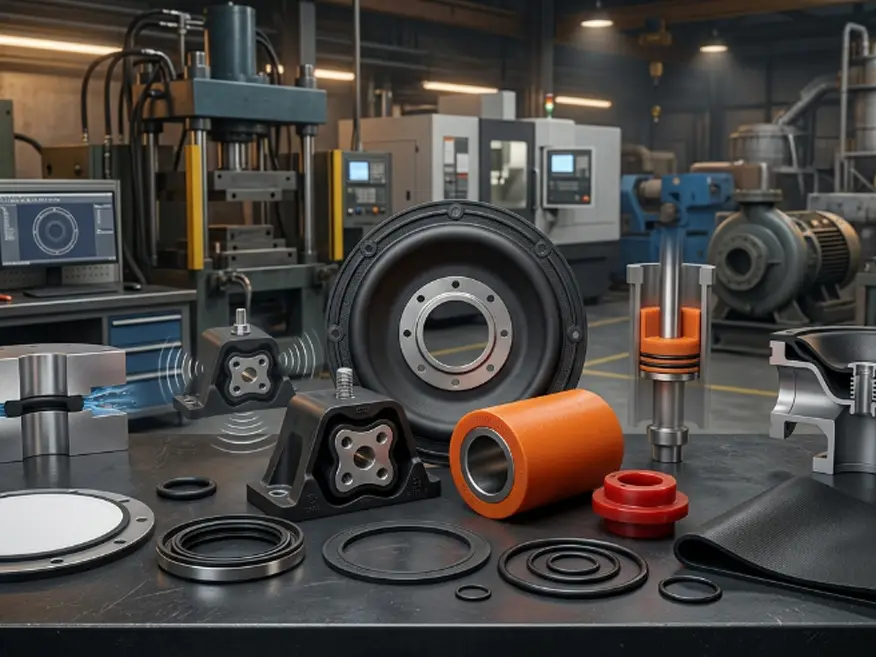
From custom molded rubber products to intricate rubber diaphragms and bespoke PTFE diaphragms, the ability to produce components tailored to exact specifications is critical. This includes precise dimensions, unique geometries, and specific material blends. An exceptional supplier will possess in-house tooling capabilities and expertise in various molding techniques (compression, injection, transfer molding) to bring your designs to life accurately and efficiently. This flexibility is essential for industries from heavy machinery to food processing.
Engineering Partnership: From Concept to Component
A truly valuable industrial rubber supplier acts as an engineering partner. They should offer consultation services, leveraging their technical acumen to optimize your designs for manufacturability, performance, and cost. This collaborative approach, often involving CAD-based manufacturing or sample analysis, ensures that even the most complex requirements are met with innovative and practical solutions. This partnership can significantly reduce development time and improve product efficacy.
3. Advanced Manufacturing Processes and Technology
Cutting-edge technology and optimized manufacturing processes are indicative of a supplier’s commitment to precision, consistency, and efficiency. Outdated equipment or inefficient workflows can lead to inconsistent quality and higher costs.
State-of-the-Art Production for Superior Results
Investigate the manufacturing facilities of potential suppliers. Do they utilize modern machinery for mixing, molding, trimming, and finishing? Advanced equipment not only enhances precision but also improves production speed, allowing for faster turnaround times without compromising quality. Ali Enterprises Pakistan employs sophisticated manufacturing techniques to produce durable components like concrete pump piston rams and polyurethane seals, ensuring every product is engineered for peak performance.
Consistency Through Innovation
Beyond machinery, the processes themselves matter. A supplier’s commitment to continuous improvement, lean manufacturing principles, and stringent in-process quality control measures ensures that every batch of products maintains the same high standard. This consistency is vital for OEM manufacturers and industrial maintenance operations that rely on interchangeable parts and predictable performance.
4. Proven Reliability and Punctual Delivery
Even the highest quality product is useless if it does not arrive when and where it is needed. Supply chain reliability and on-time delivery are non-negotiable factors for any industrial operation.
Meeting Deadlines: The Supply Chain Advantage
Unreliable delivery can halt production, lead to costly downtime, and impact customer satisfaction. An exemplary industrial rubber supplier will have robust production planning, efficient inventory management, and a reliable logistics network. They should be able to provide accurate lead times and adhere to them consistently, ensuring your operations run smoothly without interruption. For procurement managers, this translates directly into reduced operational risks and improved planning certainty.
Robust Logistics for Seamless Operations
Consider the supplier’s ability to handle different order volumes, from small batches for urgent repairs to large-scale bulk orders for major projects. Their shipping and packaging protocols should ensure products arrive undamaged and ready for immediate use. A supplier with a proven track record of timely and accurate deliveries across diverse industries, from cement plants to oil and gas, demonstrates a critical level of operational excellence.
5. Comprehensive Technical Support and Collaborative Partnership
Industrial rubber products can be complex, and technical challenges often arise. A supplier who offers proactive and responsive technical support can be an invaluable asset.
Expert Guidance When You Need It Most
Does the supplier provide readily available technical assistance for product selection, installation guidance, or troubleshooting? Access to experienced engineers and technical specialists is crucial. They should be able to answer your questions, provide material data sheets, and offer solutions to performance issues. This support can prevent costly mistakes and optimize product application.
A Partner, Not Just a Supplier
Beyond transactional interactions, seek an industrial rubber supplier who values a long-term partnership. This involves understanding your evolving needs, offering continuous improvement suggestions, and being responsive to feedback. Ali Enterprises Pakistan prides itself on fostering such relationships, working closely with clients to develop tailored industrial sealing solutions and vibration control products like anti-vibration mounts that enhance equipment reliability and reduce maintenance costs.
6. Achieving True Cost-Effectiveness and Value
While price is always a consideration, focusing solely on the lowest bid can be a costly mistake in the long run. True cost-effectiveness encompasses much more than the initial purchase price.
Beyond the Price Tag: Total Cost of Ownership
Evaluate the total cost of ownership. A cheaper, lower-quality component might fail prematurely, leading to expensive downtime, replacement costs, and labor. A high-quality rubber product, though possibly a higher initial investment, offers superior durability, longer lifespan, and better performance, resulting in significant savings over time. Consider the cost implications of early failure versus extended operational life.
Long-Term Savings Through Durability
An industrial rubber supplier providing OEM-quality components like rubber gaskets or oil seals that are engineered to withstand demanding conditions will inevitably deliver better value. Reduced need for frequent replacements, lower maintenance labor, and uninterrupted operations contribute to substantial long-term savings. When assessing suppliers, always factor in the long-term economic benefits of durability and reliability.
7. Deep Industry Experience and Stellar Reputation
A supplier’s track record and reputation speak volumes about their capabilities and trustworthiness. Experience in your specific industry sector is particularly advantageous.
A Track Record of Success Across Diverse Sectors
An industrial rubber supplier with extensive experience serving sectors like construction, cement, mining, oil & gas, automotive, and power generation understands the unique challenges and requirements of these environments. This experience translates into deeper product knowledge, effective problem-solving, and a proven ability to deliver tailored solutions. Ask for client testimonials or case studies demonstrating their success in your industry.
The Power of Testimonials and Industry Recognition
What do other procurement managers and engineers say about the supplier? Positive reviews, long-term client relationships, and industry recognition are strong indicators of a reliable partner. A supplier with a solid reputation for quality, service, and technical expertise, like Ali Enterprises Pakistan, provides the confidence you need when making critical sourcing decisions for components such as O-rings and rubber sheets.
Choosing the right industrial rubber supplier is a strategic decision that underpins the efficiency and profitability of your industrial operations. By meticulously evaluating potential partners based on these seven crucial factors – quality, customization, manufacturing prowess, reliability, technical support, cost-effectiveness, and industry experience – you can forge a partnership that provides superior components and exceptional value.
Don’t compromise on the critical components that keep your machinery running. Partner with an industrial rubber supplier who understands your needs and delivers consistent excellence. Elevate your operational performance and ensure long-term reliability.
Ready to secure a reliable, high-performance industrial rubber supplier? Contact Ali Enterprises Pakistan today to discuss your specific requirements and discover how our OEM-quality rubber and polyurethane products can enhance your operations.
Frequently Asked Questions (FAQs)
Q1: Why is material expertise so important when selecting an industrial rubber supplier?
A1: Material expertise is crucial because different industrial applications have unique demands regarding temperature, chemical exposure, pressure, and abrasion. A supplier with deep knowledge of polymer science can recommend the exact rubber or polyurethane compound that will offer optimal performance and longevity for your specific operating environment, preventing premature component failure and costly downtime.
Q2: What does ‘customization capabilities’ entail for industrial rubber products?
A2: Customization capabilities mean the supplier can design, develop, and manufacture rubber components precisely according to your unique specifications. This includes producing custom molded rubber products, diaphragms, gaskets, and seals with specific dimensions, shapes, and material properties, rather than relying solely on standard off-the-shelf items. It ensures a perfect fit and optimal function for specialized machinery or challenging applications.
Q3: How can I ensure an industrial rubber supplier offers good value beyond just low prices?
A3: To assess value, look beyond the initial price tag and consider the total cost of ownership. This includes the product’s durability, expected lifespan, impact on maintenance costs, and potential for reducing equipment downtime. A high-quality component from a reliable supplier may have a higher upfront cost but will save you significantly in the long run through extended service life and consistent performance, minimizing replacements and operational interruptions.