

Maximize Durability: Essential Maintenance Tips for Industrial Rubber Products
September 15, 2026
In the demanding world of industrial manufacturing, the smallest component can significantly impact overall system performance and operational efficiency. When it comes to rubber parts, the material choice is absolutely critical. It determines how well a component withstands extreme temperatures, harsh chemicals, constant abrasion, or continuous flexing. Choosing the right rubber material is not just about finding a fit; it's about engineering solutions that guarantee durability, enhance reliability, and deliver long-term cost savings. At Ali Enterprises Pakistan, we understand this profound impact. We are committed to guiding you through the complexities of rubber material selection.
Why Expert Rubber Material Selection is Paramount
Misselecting a rubber material can lead to frequent breakdowns, premature wear, and costly downtime. Conversely, a well-chosen material provides numerous benefits:
- Extended Lifespan: Components last longer, reducing replacement frequency and maintenance costs.
- Enhanced Performance: Optimal material properties ensure the part functions effectively under specific operating conditions.
- Improved Safety: Correct materials prevent leaks, ruptures, or failures that could pose safety risks.
- Cost Efficiency: While upfront costs might vary, the long-term savings from reduced downtime and extended service life are substantial.
- Compliance: Meeting industry-specific standards and regulations often mandates precise material specifications.
Understanding your application's unique requirements is the first step toward making an informed material decision. We act as your expert partner in this crucial process.
Key Factors Influencing Material Selection
To ensure peak performance, several critical factors must be carefully evaluated when selecting a rubber material for industrial use:
1. Operating Environment
The environment where the rubber component will operate is perhaps the most significant factor. Consider:
- Temperature Range: Will the part be exposed to extreme heat or cold? Some rubbers become brittle at low temperatures or degrade rapidly at high temperatures.
- Chemical Exposure: Will it contact oils, fuels, acids, alkalis, solvents, or gases? Different rubbers have varying resistance levels.
- UV and Ozone Exposure: For outdoor applications, resistance to sunlight and ozone is vital to prevent cracking and degradation.
- Water and Steam: Some rubbers swell or lose strength when exposed to water or steam over prolonged periods.
- Abrasion: Is the part subject to friction or wear? Some materials offer superior abrasion resistance.
2. Mechanical Requirements
The physical demands on the component are equally important:
- Tensile Strength & Elongation: The material's ability to resist pulling forces and stretch without breaking.
- Compression Set: How well the material returns to its original shape after prolonged compression. Crucial for sealing applications.
- Hardness (Durometer): Measured on the Shore A scale, this indicates the material's resistance to indentation. It impacts sealing effectiveness and load-bearing capacity.
- Tear Resistance: The material's ability to resist the growth of a tear.
- Dynamic vs. Static Applications: Whether the part is subjected to constant movement (e.g., vibration, flexing) or remains stationary.
3. Industry Standards and Regulations
Certain industries, like food processing, pharmaceuticals, or oil and gas, have stringent material compliance requirements (e.g., FDA, USP Class VI, ASTM, API). Ensuring the selected rubber meets these standards is non-negotiable for product safety and legal adherence.
4. Cost-Effectiveness
While material cost is a factor, it should always be balanced against performance and lifespan. A cheaper material that fails quickly will incur higher overall costs in replacements and downtime. Investing in OEM-quality, durable components often proves more economical in the long run.
Common Industrial Rubber Materials and Their Applications
Let's delve into the characteristics of commonly used rubber compounds and their ideal industrial applications:
1. Natural Rubber (NR)
Derived from latex, Natural Rubber boasts excellent tensile strength, tear resistance, and dynamic properties. It offers superior abrasion resistance and good low-temperature flexibility. However, it has poor resistance to oils, ozone, and sunlight.
- Key Properties: High elasticity, excellent abrasion and tear resistance, good dynamic properties.
- Typical Applications: Anti-vibration mounts, conveyor belts, shock absorbers, general-purpose gaskets where oil resistance is not required.
2. Styrene-Butadiene Rubber (SBR)
SBR is a synthetic rubber, often used as a direct replacement for natural rubber due to its similar properties and lower cost. It offers good abrasion resistance and aging stability but shares NR's limitations regarding oil, ozone, and weather.
- Key Properties: Good abrasion resistance, high impact strength, cost-effective.
- Typical Applications: Tires, shoe soles, general-purpose seals, and gaskets, where moderate demands are present.
3. Ethylene Propylene Diene Monomer (EPDM)
EPDM is renowned for its outstanding resistance to weathering, ozone, UV radiation, and steam. It also performs well in hot water and polar solvents but is not suitable for petroleum-based fluids.
- Key Properties: Excellent weather, ozone, UV, heat, and steam resistance. Good electrical insulation.
- Typical Applications: HVAC seals, automotive weather stripping, outdoor electrical insulation, roof membranes, water system gaskets.
4. Nitrile Rubber (NBR)
Also known as Buna-N, Nitrile is a workhorse in industries dealing with oils and fuels. It offers excellent resistance to petroleum-based oils, hydraulic fluids, and many chemicals. However, it has limited resistance to ozone and sunlight.
- Key Properties: Excellent oil, fuel, and chemical resistance. Good abrasion resistance.
- Typical Applications: Oil seals, fuel hoses, gaskets for engines and hydraulic systems, O-rings, concrete pump piston rams.
5. Chloroprene Rubber (CR) / Neoprene
Neoprene offers a good balance of properties, including moderate resistance to oils, chemicals, weather, and ozone. It also exhibits good flame resistance, making it versatile across various applications.
- Key Properties: Good all-round resistance to weather, ozone, oils, and chemicals. Flame retardant.
- Typical Applications: Weather seals, construction expansion joints, automotive components, cable jackets, industrial belts.
6. Silicone Rubber (VMQ)
Silicone is characterized by its wide operating temperature range, excellent flexibility, and low compression set. It's often chosen for applications requiring hygiene and high-temperature stability, with good resistance to ozone and UV, but poor abrasion and tear resistance.
- Key Properties: Wide temperature range (-60°C to +230°C), excellent flexibility, good electrical insulation, biocompatibility.
- Typical Applications: Food processing equipment seals, pharmaceutical components, medical devices, high-temperature gaskets, oven seals, cleanroom applications.
7. Fluoroelastomer (FKM) / Viton
Viton is a high-performance synthetic rubber known for its exceptional resistance to extreme temperatures, fuels, oils, and a broad spectrum of aggressive chemicals. It is typically used in the most demanding industrial environments.
- Key Properties: Superior chemical, oil, and high-temperature resistance. Low gas permeability.
- Typical Applications: Oil & gas exploration, chemical processing seals, automotive fuel systems, aerospace components, high-performance O-rings and gaskets.
8. Polyurethane (PU)
Polyurethane stands out for its outstanding abrasion, tear, and impact resistance. It also boasts high load-bearing capacity and excellent resistance to oils and greases, making it ideal for heavy-duty applications. It is not technically a rubber but a polymer with elastomeric properties.
- Key Properties: Exceptional abrasion, tear, and impact resistance. High tensile strength, good oil and grease resistance.
- Typical Applications: Heavy machinery seals, scraper blades, industrial wheels, wear pads, concrete pump piston rams, shock absorbers, polyurethane seals.
9. Polytetrafluoroethylene (PTFE)
Though not strictly a rubber, PTFE is a fluoropolymer widely used in sealing applications due to its remarkable chemical inertness, extremely low friction, and ability to withstand high temperatures. It is often chosen when aggressive chemicals are present.
- Key Properties: Exceptional chemical resistance, very low friction coefficient, wide temperature range.
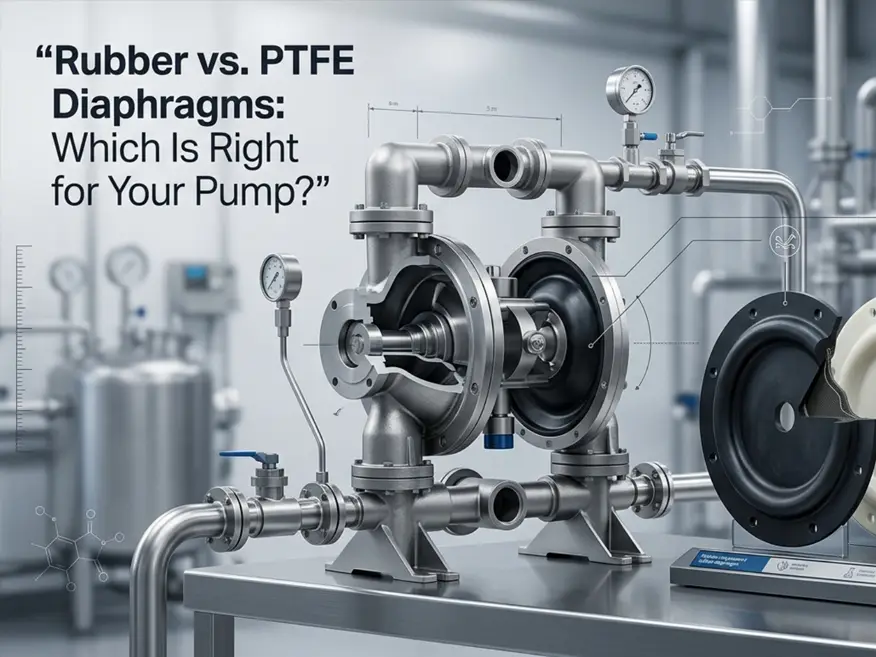
- Typical Applications: Chemical processing diaphragms (PTFE diaphragms), pipe linings, high-temperature gaskets, non-stick coatings, medical implants.
Custom Rubber Molding and Engineering Solutions: The Ali Enterprises Advantage
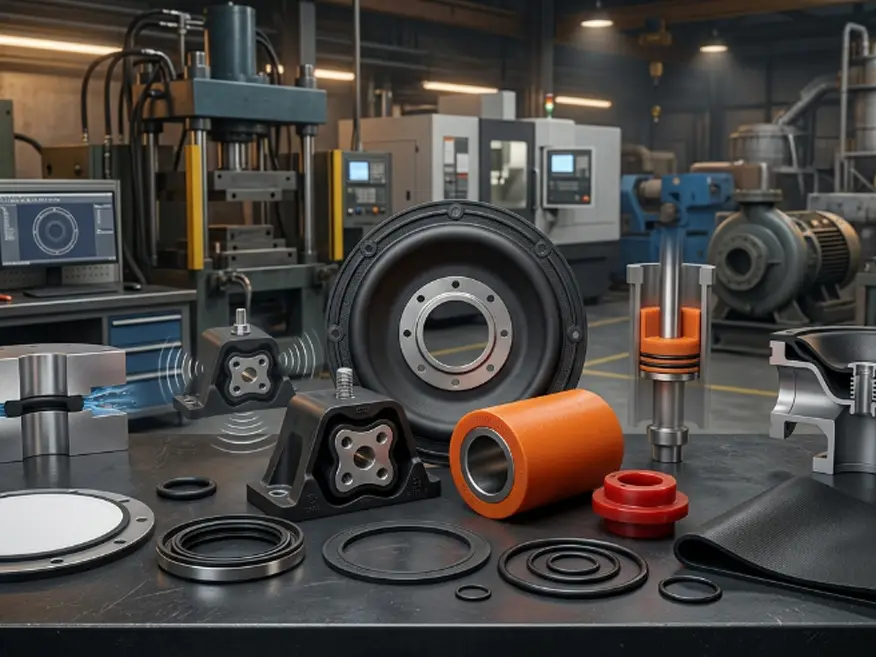
At Ali Enterprises Pakistan, we don't just supply standard parts; we engineer solutions. Our expertise in custom rubber molding allows us to create components perfectly tailored to your unique specifications. We work with a wide range of materials, ensuring that whether you need rubber diaphragms, anti-vibration mounts, oil seals, rubber gaskets, PTFE diaphragms, polyurethane seals, or specialized O-rings, we can deliver.
Our process involves:
- Expert Consultation: Our engineers collaborate with you to understand your application, operating environment, and performance needs.
- Material Selection Guidance: Based on our deep knowledge of polymer chemistry and industrial applications, we recommend the most suitable rubber or polyurethane material.
- Precision Manufacturing: Utilizing advanced custom rubber molding techniques and state-of-the-art machinery, we produce OEM-quality components with exceptional accuracy and consistency.
- CAD/Sample-Based Manufacturing: We can reverse-engineer parts from samples or produce new components from your CAD designs, ensuring a perfect fit and function.
- Quality Assurance: Every product undergoes rigorous quality checks to meet the highest industry standards, ensuring durability and reliability.
We serve a diverse array of industries, including construction, cement, mining, oil & gas, automotive, heavy machinery, power generation, and food & pharmaceutical equipment. Our commitment is to provide durable, high-performance industrial rubber components that enhance equipment reliability, reduce maintenance costs, and improve your operational efficiency.
Choosing the right rubber material is an investment in the longevity and performance of your industrial machinery. With Ali Enterprises Pakistan, you gain a partner dedicated to providing expert guidance and superior quality custom rubber components.
Ready to optimize your industrial applications with the perfect rubber material? Contact Ali Enterprises Pakistan today for a consultation or to discuss your custom molding requirements. Let our expertise empower your operations.
Frequently Asked Questions (FAQs)
Q1: How do I know which rubber material is best for high-temperature applications?
A1: For high-temperature applications, materials like Silicone Rubber (VMQ) or Fluoroelastomer (FKM/Viton) are typically recommended. Silicone can withstand temperatures up to 230°C, while Viton offers superior performance in even more extreme heat and chemical environments. The specific operating temperature range and chemical exposure will dictate the optimal choice.
Q2: What's the difference between rubber and polyurethane (PU) seals?
A2: While both are elastomeric, traditional rubber seals offer excellent flexibility and chemical resistance depending on the compound. Polyurethane (PU) seals, on the other hand, are renowned for their exceptional abrasion resistance, tear strength, and load-bearing capacity. PU is often chosen for heavy-duty applications where wear and impact are major concerns, whereas specific rubbers might be preferred for their chemical inertness or temperature range.
Q3: Can Ali Enterprises Pakistan provide custom-sized rubber gaskets or seals?
A3: Absolutely. Ali Enterprises Pakistan specializes in custom rubber molding and manufacturing. We can produce rubber gaskets, seals, diaphragms, and other components in custom sizes and specifications based on your CAD drawings or even a physical sample. Our engineering team ensures that the selected material and design perfectly match your application's unique requirements.